

Introduction
If you are researching github copilot chat features guide, you are not alone. Thousands of developers are adopting AI-powered coding tools in 2026, and Cursor has become one of the most discussed editors in the Other Ai Ides Tools space. This guide gives you a practical, in-depth walkthrough so you can move from curiosity to confident daily use without wasting hours on fragmented blog posts or outdated forum threads.
Whether you are evaluating Cursor for a side project, rolling it out across a team, or optimizing an existing workflow, the concepts below apply at every skill level. We cover fundamentals, step-by-step configuration, real-world workflows, and the mistakes that slow teams down. By the end, you will have a clear mental model of how github copilot chat features guide fits into a modern development stack and what to do next on your machine.
Cursor Ultra helps developers activate Cursor Pro, Pro+, and Ultra plans on their own accounts. While this article focuses on education rather than sales, understanding official plan limits and model access will help you choose the right setup as your usage grows.
Understanding github copilot chat features guide
At its core, github copilot chat features guide addresses a specific friction point in the developer experience. Cursor builds on the familiar VS Code foundation but layers conversational AI, agentic editing, and deep codebase awareness on top. That combination changes how you write, refactor, review, and ship code — especially on large repositories where context switching used to dominate your day.
The topic sits within the broader category of Other Ai Ides Tools. Related capabilities in Cursor — tab completions, inline edits, Composer, Agent mode, MCP integrations, and cloud agents — often work together. When you optimize one area, you frequently unlock gains elsewhere. For example, better project indexing improves both chat answers and multi-file refactors.
Before changing settings or buying a higher plan, map your actual workflow: languages, frameworks, monorepo vs single app, remote SSH, and how much you rely on AI for generation vs review. That honest audit prevents over-configuration and keeps github copilot chat features guide aligned with measurable outcomes like faster PR cycles or fewer regression bugs.
Detailed Implementation Guide
Implementing github copilot chat features guide successfully requires sequencing: install, authenticate, configure workspace trust, index the repository, then experiment in a low-risk file before touching production modules. Skipping indexing or opening the wrong root folder is the most common source of ‘the AI doesn’t understand my project’ complaints.
Document each step with timestamps and version numbers. When Cursor updates weekly, your notes help you diff behavioral changes vs regressions. Keep a scratch buffer of prompts that worked well; they become reusable playbooks for your team.
If you integrate with remote development — SSH, dev containers, or WSL — confirm AI features are enabled in that environment. Some networking setups block endpoints required for streaming completions or agent tools.
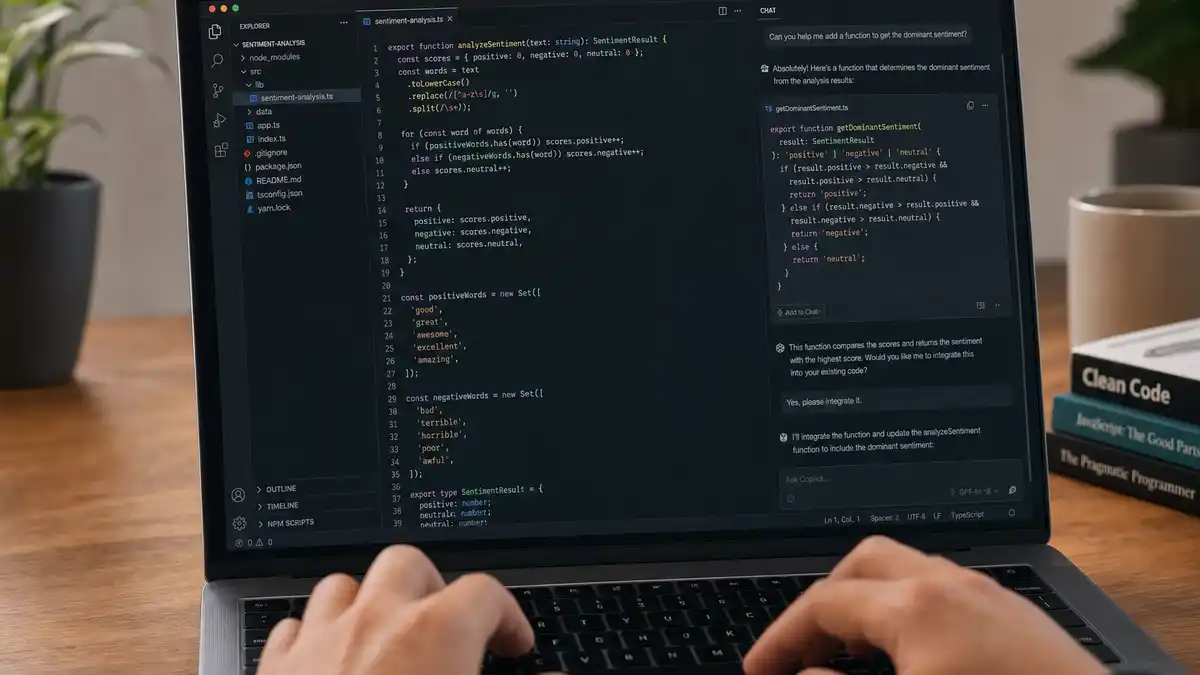
Prerequisites and Environment Setup
Start with a supported operating system and a stable internet connection. Cursor downloads model-backed features on demand, and intermittent connectivity produces confusing partial failures that look like application bugs. Close memory-heavy containers if you are on a laptop with 8 GB RAM; Agent mode and large indexing jobs are noticeably smoother with 16 GB or more.
Install Git and ensure your default shell is configured. Cursor inherits VS Code’s terminal integration, so zsh, bash, or PowerShell profiles should load correctly. Sign in with the account you plan to keep long term — switching accounts later can complicate synced settings and billing history.
For team environments, document a baseline github copilot chat features guide configuration in an internal wiki. Include screenshots, version numbers, and rollback steps. Teams that treat AI editor setup as shared infrastructure — not individual tinkering — onboard new engineers faster and reduce ‘works on my machine’ support threads.
Step-by-Step Workflow
- Open Cursor and confirm you are signed in with the correct GitHub, Google, or email account.
- Clone or open the repository where you will apply github copilot chat features guide. Wait for indexing to complete.
- Review workspace settings: formatter, linter, test runner, and AI model preferences.
- Create a scratch branch so experiments do not contaminate mainline history.
- Run a small controlled test — edit one function or doc file using AI assistance.
- Validate with unit tests, type checks, and a quick manual smoke test.
- Document what worked, then scale the same pattern to larger tasks.
- Share findings with your team and codify repeatable prompts or rules files.
Following this sequence reduces rework and makes results easier to reproduce across machines and teammates.
Best Practices for Reliable Results
Treat AI suggestions as drafts, not authoritative truth. Run tests, linters, and type checkers after every non-trivial acceptance. Cursor accelerates implementation, but engineering judgment remains essential — especially around security, performance, and API contracts.
Keep prompts specific: mention files, functions, constraints, and forbidden approaches. Vague instructions produce vague code. When working on github copilot chat features guide, reference your repo’s conventions explicitly so the model mirrors existing patterns instead of inventing new ones.
Use version control aggressively. Commit before large agent refactors so you can bisect issues quickly. Many experienced users create a dedicated branch per AI-assisted feature and squash only after human review.
Refresh context when you switch tasks. Long sessions accumulate stale assumptions. Starting a focused chat or composer session per ticket improves coherence and reduces hallucinated imports or deprecated APIs.
Common Mistakes to Avoid
- Accepting large AI diffs without reading them line by line.
- Working without git commits between major refactors.
- Using vague prompts that omit file names, constraints, or test expectations.
- Ignoring official plan limits until workflows halt mid-sprint.
- Skipping project indexing and blaming the model for missing context.
- Enabling every experimental feature at once instead of incremental adoption.
- Forgetting to update github copilot chat features guide documentation after process changes.
Advanced Tips and Power-User Strategies
Combine MCP servers with project rules to encode architecture decisions the model must follow. This is especially valuable for microservices, shared libraries, and regulated industries where certain folders or patterns are off limits.
Leverage `.cursorrules` or workspace instructions to standardize tone, testing requirements, and documentation format. Teams that invest once in rules files save hours weekly across every developer touching github copilot chat features guide.
Profile your usage monthly: premium requests, model selection, and tab vs agent ratio. Data-driven plan decisions beat guesswork, particularly when usage spikes during migrations or hack weeks.
Pair Cursor with CI/CD discipline. AI can generate features quickly; pipelines ensure quality gates remain non-negotiable. The fastest teams treat AI as a junior pair programmer with unlimited stamina — not a replacement for code review.
Conclusion
github copilot chat features guide is a practical investment in developer productivity when approached with clear goals and healthy skepticism toward unverified output. Start small, measure results, and expand into advanced features once basics feel automatic.
Cursor continues to ship rapid improvements; revisit this workflow quarterly and adjust settings as new models and tools appear. If you need help activating Cursor Pro, Pro+, or Ultra on your own account, Cursor Ultra provides activation assistance with a full-month warranty — but the techniques in this guide apply regardless of where you purchase your plan.
Your next step: open Cursor, apply one recommendation from this article today, and track whether your next task ships faster. Momentum compounds faster than perfect configuration ever will.
What is github copilot chat features guide?
github copilot chat features guide is a focused topic within the Cursor AI coding ecosystem. It covers practical techniques, configuration, and workflows developers use to ship software faster while maintaining quality and control over generated code.
Do I need a paid Cursor plan for github copilot chat features guide?
Many aspects work on the free tier for evaluation, but advanced models, higher limits, and team features require a paid plan. Match your subscription to actual usage rather than choosing solely on price.
How long does it take to implement github copilot chat features guide?
Most developers see initial results within one working session. Full team adoption typically takes one to two weeks including documentation, testing, and prompt standardization.
Is github copilot chat features guide suitable for teams?
Yes. Teams benefit when they share configuration baselines, prompt libraries, and code review standards. Cursor supports collaboration patterns similar to VS Code with added AI governance considerations.
What are common errors when working with github copilot chat features guide?
Incomplete indexing, wrong workspace root, extension conflicts, and network restrictions cause most issues. Follow the troubleshooting section and reproduce problems in a minimal repo before deep debugging.
Can I use github copilot chat features guide with remote SSH or dev containers?
Yes. Cursor supports remote development workflows comparable to VS Code. Verify AI features are reachable from remote environments and that required endpoints are not blocked by VPN or proxy policies.