A model is good at continuing. It is not good at knowing where you meant to stop. If you open a chat with a topic and no decision, the draft will make the decisions for you: who the piece is for, how bold the claim is, which files may change, and what “done” looks like. Those choices arrive disguised as prose, so they feel like part of the answer rather than a substitution for your judgment.
Write the decision where you can see it
Before you ask for a draft, write three lines and leave them above the chat. The reader, named as a person with a job. The one change this piece or this patch is allowed to make. The list of things it must not do: invent a number, touch a second module, add a dependency, soften a failure into a success. Three lines are enough. A paragraph of aims is how the boundary starts to dissolve.
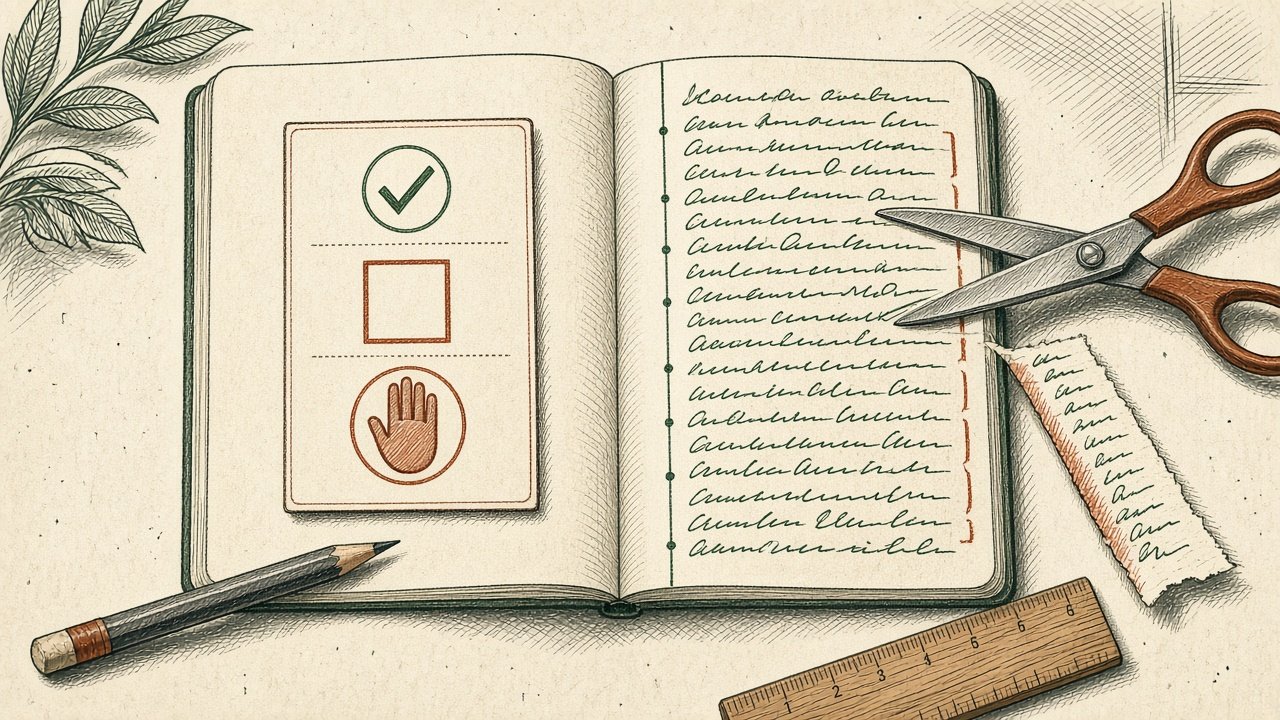
Keep that card visible while you read the result. The illustration at the top of this article is the same habit drawn out: the rules stay on one page, and anything that runs past the margin is cut, not negotiated. Fluency is not a reason to move the margin.
Read for trespass, then for quality
The first pass is not “is this good?” The first pass is “did it stay inside the three lines?” Mark every sentence or hunk that adds a reader, a claim, a file, or a behavior you did not ask for. Delete those before you repair grammar or structure. If you edit the trespass into something nicer, you have accepted a decision you did not make.
A common trespass in coding chats is the helpful extra: a new helper, a retry, a log line, a refactor of the neighbor function. Each one can be defended. That is why the card has to exist before the defense. “Do not add a retry” is a decision. “The retry is only five lines” is a negotiation with a draft.
When the draft is right to spill
Sometimes the model crosses the line because the line was wrong. You asked for a function and the honest shape is two functions. You asked for a short note and the reader cannot act without a worked example. In that case, change the card first, in your own words, and then ask again. Do not quietly keep the spill and pretend the original decision still stands. The card is the record of what you chose. If you change your mind, the card should change too.
A stop that survives the next chat
The next session will not remember the margin unless you write it down outside the transcript. Put the three lines in the issue, the commit message, or the top of the document. When you start a new chat, paste the card, not the previous conversation. The conversation contains every rejected idea. The card contains the decision. Models continue whatever you put in front of them, so put the boundary in front of them.